Every Facility Has Different Demands
Industrial floors do not all fail for the same reasons, which is exactly why a one-size-fits-all coating approach can miss the mark. A warehouse may battle constant forklift traffic and abrasion, while a manufacturing facility may deal with chemicals, impact, heat, or heavy machinery. Other businesses may be more focused on cleanliness, slip resistance, or keeping maintenance simple. The best industrial concrete coating system starts by looking at how the space is actually used, then matching the flooring to those demands. Concrete Coatings of Kansas helps businesses think beyond basic coverage by considering performance, safety, appearance, and long-term use together. Modern industrial flooring can do far more than hide bare concrete. With the right system, a floor can become a stronger, cleaner, safer, and more professional part of the facility while standing up to the everyday punishment that comes with a busy industrial environment.
Tough Spaces Need Tougher Systems
High-use industrial floors are constantly being tested. Equipment rolls across them. Chemicals may spill. Heavy objects can hit the surface. Employees move through the same pathways day after day. Temperature changes and other environmental conditions can create additional stress. That is why high-performance concrete coatings are designed around resistance to abrasion, impact, chemicals, and thermal stress. Matching the coating to the facility gives businesses a better chance of protecting the floor from the type of wear it is most likely to face. A coating designed for heavy traffic should not be treated the same as one intended for a lighter-use setting. Tailoring the system also helps support longer-term value by reducing the likelihood that the floor will need frequent repairs or premature replacement. For industrial spaces, the goal is not simply to make concrete look better. It is to make the surface better suited to the work happening on top of it.
Cleaner Floors Can Work Smarter
Seamless concrete coating systems bring another layer of value to industrial environments by reducing the joints and seams where dirt, debris, and bacteria can collect. Fewer collection points can make routine cleaning easier and help the floor maintain a cleaner overall appearance. Safety can also be built into the finished system. Slip-resistant textures can be incorporated to improve traction in areas where water, oils, or other liquids may create slick conditions. That can be especially important in industrial facilities where employees are constantly moving through active work zones. Some coating technologies also offer lower-VOC options, which can support improved indoor air quality and help businesses pursue more environmentally conscious upgrades. These advances show how much industrial concrete coatings have changed. Today’s flooring systems can help address cleaning, safety, sustainability, and maintenance needs at the same time rather than forcing businesses to choose one priority over another.
Industrial Does Not Mean Boring
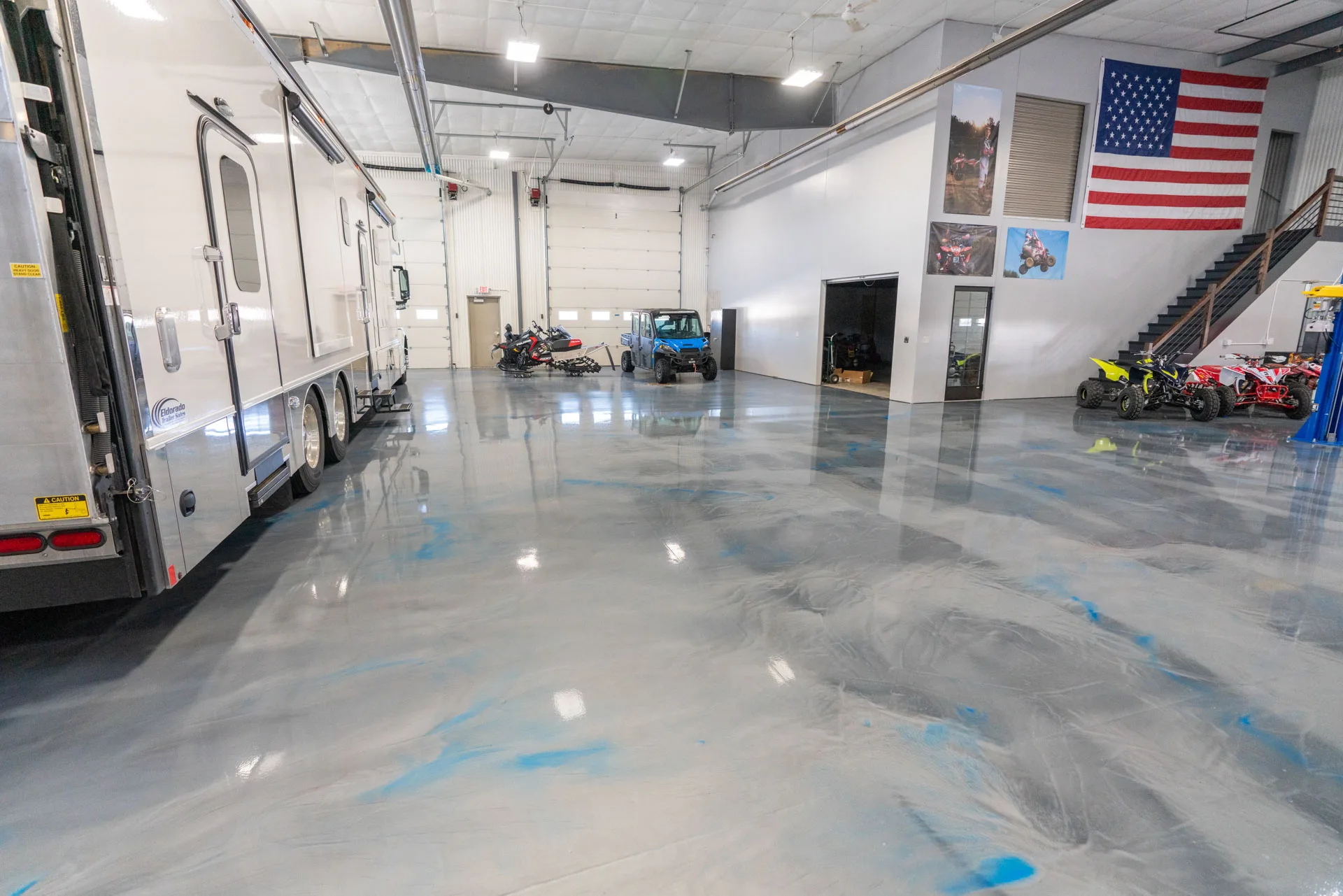
Durability may be the priority, but appearance still matters. Modern industrial concrete coatings can be customized with different colors, textures, and patterns, giving businesses the ability to create flooring that fits the look and identity of the facility. A cleaner, more polished floor can help an industrial space feel more professional without sacrificing the strength needed for daily operations. That is a big shift from the days when industrial flooring was treated as purely functional and visually unimportant. Concrete Coatings of Kansas helps businesses look at the whole picture, including traffic, chemicals, safety, maintenance, appearance, and environmental goals. The result is a more thoughtful approach to industrial flooring, where the coating is selected for the job instead of chosen from a generic menu. When form and function work together, an industrial floor can become more durable, easier to maintain, safer to use, and far better suited to the demands of the space.